Case studies
Real studies our team has completed, with the method, the sample and the findings shown the same way every figure on this site is shown.
One note on names: where a study was delivered for a named client, we publish it here only once that client has confirmed they're comfortable with public attribution. Until then, we describe the client by sector and scale rather than by name — the findings and method are shown in full either way.
Surveys and measurement
Real exampleMeasuring community impact along a cross-border energy corridor
Client
A cross-border energy infrastructure operator
Scope
33 communities in Lagos and Ogun States, along a 56km right-of-way
Sample
308 households in each of two rounds, 2019 and 2022
A structured household survey of the 33 communities adjoining the pipeline's right-of-way, run in 2019 and repeated in 2022, to assess how the operator's activities were perceived to affect local health, livelihoods and socioeconomic conditions. The figures below are from the 2022 round.
53%
of respondents were women — the survey deliberately sampled beyond the male household head.
75%
of respondents were aged 21–50, the working-age population most exposed to the corridor's economic effects.
More than half
of respondents, 165 of 308, reported a monthly income below the state minimum wage.
91%
of households had a functional water-closet toilet — a proxy for baseline living standards used to contextualise other findings.
The brief was straightforward to state and hard to answer honestly: has four years of a major infrastructure operator's presence changed anything measurable for the people who live along its route? A perception survey alone would have told us what people believed; it would not have told us what their actual living conditions were, or let us check one against the other.
So the questionnaire covered both: household demographics, income, housing and sanitation, built first, and only then questions about the operator directly — awareness of its community programmes, and views on the working relationship. Structuring it that way meant we could report the community's material circumstances as facts, not as something filtered through opinion of the company, and then look separately at whether people's stated experience of the company's presence lined up with those facts.
Income was the clearest finding to state plainly: with the state minimum wage at ₦30,000, more than half of respondents were living below it. That is not a finding about the operator — it is the baseline any claim about the operator's impact has to be checked against.
Why this matters right now
Nigeria's oil and gas host communities are the subject of an active national policy debate — the Petroleum Industry Act's host-community trust provisions were designed for exactly this kind of measurement gap, and their success depends on baseline data that most operators have never actually collected in a structured, checkable way.
Qualitative research
Real exampleWhat traditional rulers and community leaders said, in their own words
Client
The same cross-border energy infrastructure operator
Scope
Communities along the right-of-way in Lagos and Ogun States
Sample
12 traditional rulers and 12 focus group discussions
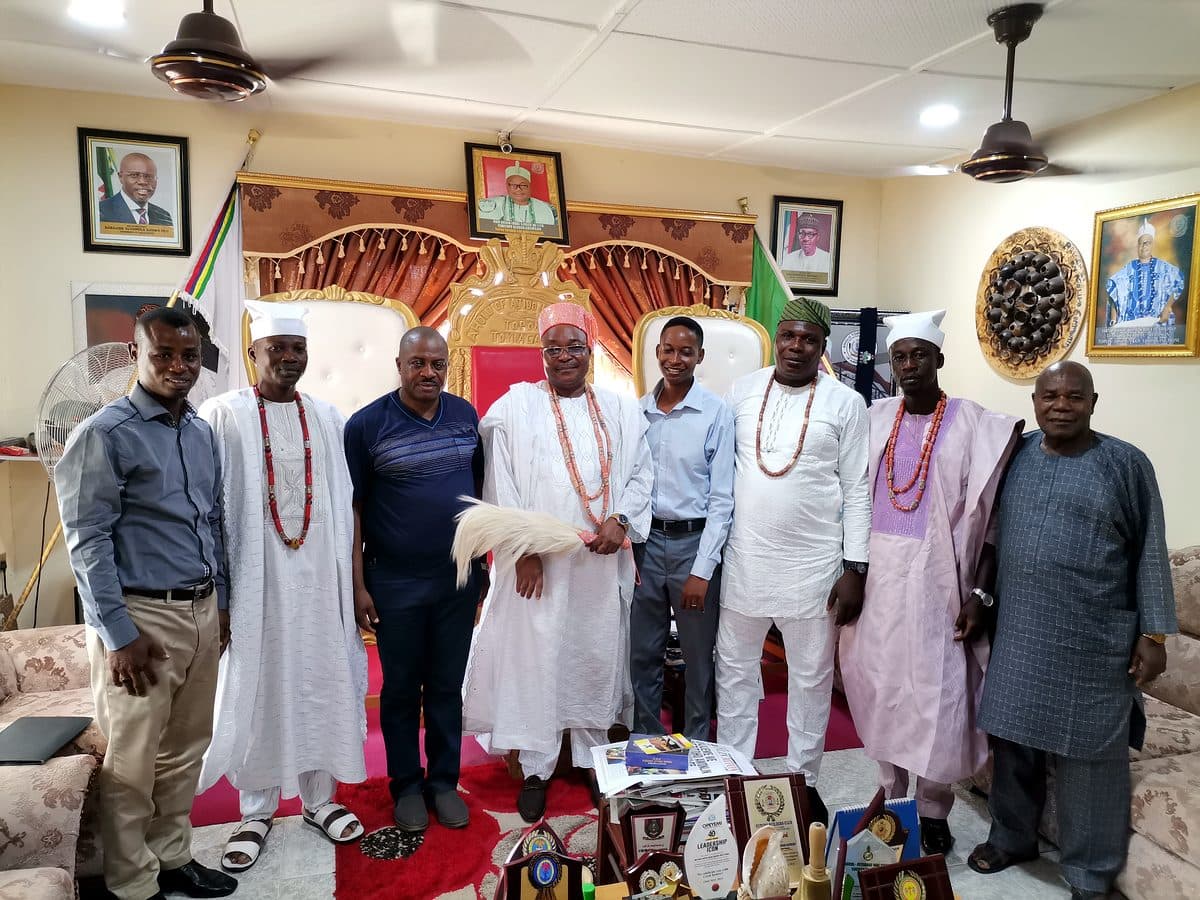
Key informant interviews with traditional rulers, and focus group discussions with community leaders and representatives — run as a companion piece to the household survey, not a substitute for it.
Low friction
Traditional rulers described the relationship with the operator as without significant friction or restiveness.
1
concrete commitment traced from the prior audit cycle to this one — an indigene hired permanently after a fixed-term contract, raised and confirmed at follow-up.
2 concerns
raised independently by different communities: fishermen and weavers travelling further for raw materials, and informal sand-mining encroaching on the right-of-way.
A household survey can tell you what a population believes on average. It cannot tell you why a community leader trusts an operator, or what a community wants fixed next — and both of those questions mattered here.
The rulers and the community groups were consistent on the big picture and specific on the detail. Each community raised something concrete and local: one community's leadership wanted the maintenance contract sum increased to reflect real costs; another wanted outboard engines procured for fishermen now travelling further for their trade; a third flagged sand-mining on land near the right-of-way as an emerging risk, not yet a crisis.
That last point is the kind of finding a satisfaction survey would miss entirely, because nobody has been harmed by it yet — it surfaced only because the interview guide asked leaders to look forward, not just report on the present. We wrote it up as a flagged risk, not a confirmed finding, which is the distinction a rigor framework exists to enforce.
Why this matters right now
Land pressure from informal sand mining is a growing, under-documented risk to infrastructure right-of-way corridors across the Niger Delta and southwest Nigeria, and it rarely appears in routine monitoring because, by definition, nothing has gone wrong with it yet.
Surveys and measurement
Real exampleMapping the real cost of moving food across Nigeria
Client
Adebayo Adeleke LLC
Scope
Seven states: Benue, Kano, Borno, Oyo, Edo, Lagos and Abuja (FCT)
Sample
195 respondents (98 farmers, 95 suppliers/retailers)
A structured quantitative survey of farmers and produce suppliers/retailers, run as the quantitative companion to our qualitative study of Nigeria's indigenous supply chain system for the same client (below). It covered household and business profile, eleven staple crops, warehouse operations, and — for the supplier/retailer half of the sample specifically — the factors respondents said actually drove their costs and selling prices.
55% to 9%
was the range in how often suppliers and retailers named insecurity as the single factor most affecting their business, from Abuja at the high end to Kano at the low end.
56 of 93
suppliers and retailers who named a main business factor at all named insecurity — more than every other factor combined, including climate change and government policy.
20 of 93
suppliers and retailers who named a main driver of their selling price pointed to transportation and logistics cost specifically, the second most-cited factor after purchase price.
20 vs 17 years
was the average experience of farmers versus suppliers/retailers in the sample — both groups are established operators, not new entrants.
Adebayo Adeleke's research into Nigeria's indigenous logistics systems — the motor parks, the waybill system, the informal courier networks that move most goods in the country — draws on the 84 in-depth interviews we ran for the qualitative half (the next case study). This survey was the quantitative half: put numbers behind what those interviews were hearing, across a structured sample of farmers and produce suppliers.
The state-level breakdown is the finding worth sitting with. Averaged across the whole sample, insecurity is the dominant factor by a wide margin. But averaging hides the real story: in Abuja, 55% of suppliers and retailers named it as their single biggest problem; in Kano, only 9% did. A national number would have flattened that gap into a single, less useful figure. The state-by-state breakdown is what makes it usable for anyone deciding where to focus a policy response.
One methodological point worth stating plainly, because the client's own instrument was built this way and we kept faith with it: the question about the single biggest business factor was only put to suppliers and retailers, not to farmers directly. We report it as a supplier/retailer finding throughout, not as a claim about the whole sample — the same discipline we'd apply to any commissioned study, on our own past work as much as anyone else's.
Why this matters right now
Food inflation and farm-to-market logistics costs have been a recurring theme in Nigeria's economic policy debate; a state-by-state breakdown is what turns "insecurity is hurting food supply" from a widely repeated claim into something a state government or a donor can actually act on locally.
Qualitative research
Real exampleIndigenous Supply Chain Management System
Client
Adebayo Adeleke LLC
Scope
Seven states and the FCT: Lagos, Kano, Borno, Akwa Ibom, Benue, Edo, Anambra and Abuja
Sample
84 in-depth interviews and 315 structured surveys
In-depth interviews, backed by a structured survey, tracing how Nigeria's indigenous logistics systems work, what holds them together, and how they carry over into today's motor-park and jetty logistics. It pairs with the food supply survey above.
Culture, trust and neighbourliness
Indigenous cultures across Nigeria have an established logistics system built on all three.
Old into new
Insights from these historical systems are now blended into today's motor-park logistics system.
One set of principles
Today's motor-park system works in principle like the indigenous systems, but is standardised across cultures and controlled by transport officials at motor parks and jetties.
Billions of naira
The indigenous system is international in reach, and the goods it moves and the revenue it creates are worth billions of naira every year.
Alongside Nigeria's formal freight companies runs a far older way of moving goods: through motor parks, jetties and networks of people who know and vouch for each other. The brief was to understand that system on its own terms: how it works, what holds it together, and how much of today's motor-park logistics is old and how much is new.
Across 84 in-depth interviews in seven states and the FCT, backed by 315 structured surveys, the picture was consistent. Indigenous cultures across the country built logistics systems on culture, trust and neighbourliness, and the principles of those systems carry straight into today's motor parks. What has changed is standardisation: the modern system runs on similar principles from one culture to the next, and transport officials at motor parks and jetties control it.
The finding with the widest consequences is scale. This is not a local, informal fringe. The indigenous logistics system reaches beyond Nigeria's borders, and moves goods and creates revenue worth billions of naira every year.
Why this matters right now
Plans to cut food and transport costs, or to bring logistics revenue into the formal economy, usually start from formal freight and customs data. A system that moves goods worth billions of naira a year on trust, under the control of transport officials at motor parks and jetties, is one those plans have to understand first.
Data systems and M&E
Real exampleBuilding M&E capacity for Bauchi State’s social protection policy
Client
Bauchi State Ministry of Budget and Planning
Scope
Implementation of the Bauchi State Social Protection Policy; training held in Jos, Plateau State, in 2023
Participants
44 Bauchi State officials
An interactive monitoring and evaluation training for the programme managers implementing the Bauchi State Social Protection Policy, built around the State’s own implementation plan and M&E framework rather than a generic course.
44
state officials trained: the programme managers responsible for putting the policy into practice.
Indicators
Participants worked from the State’s own M&E framework to identify the indicators its implementation plan will be tracked against.
Roles
Participants set out who is responsible for which monitoring and reporting tasks under the plan.
Hands-on
The training was interactive and built on the State’s own policy documents, not a generic M&E course.
A social protection policy is only as useful as a state’s ability to see whether it is being delivered. Bauchi State had its policy, an implementation plan and an M&E framework. The next step was making sure the programme managers responsible for delivery could use them.
In 2023, for the State’s Ministry of Budget and Planning, we ran an interactive M&E training for 44 officials, held in Jos. Instead of teaching monitoring and evaluation in the abstract, the sessions worked directly from the State’s own documents: identifying the indicators the implementation plan will be tracked against, and agreeing who does what.
That second step is the one most often skipped. A framework that names indicators but not the people who collect, check and report them tends to stay on paper. Settling roles alongside indicators is what turns an M&E framework into a routine a ministry can rely on.
Why this matters right now
Nigerian states are putting their own social protection policies and frameworks in place. A framework only produces evidence if the people delivering programmes know what to measure and whose job it is, which makes it a training question as much as a design one.
Want to see the full report behind one of these?
Ask, and we'll share what we can. Some detail stays with the client until they're ready to publish it themselves.