Where do we work, and how do we decide where next?
Nigeria first: the fieldwork base, designed to report from zone to state. Across Africa: evidence where the question is continental, and fieldwork elsewhere only when we can meet the same standard.
Where we work as of October 2026. Next review January 2027.
Two places, two different promises
What are the six zones?
Nigeria has 36 states and the Federal Capital Territory, grouped into six geopolitical zones. The zones are not constitutional units. Agencies and researchers use them for planning and reporting, and so do we. We always say whether a figure is a zone figure or a state figure.
| Code | Zone | States |
|---|---|---|
| NC | North Central | Benue, Kogi, Kwara, Nasarawa, Niger, Plateau, Federal Capital Territory |
| NE | North East | Adamawa, Bauchi, Borno, Gombe, Taraba, Yobe |
| NW | North West | Jigawa, Kaduna, Kano, Katsina, Kebbi, Sokoto, Zamfara |
| SE | South East | Abia, Anambra, Ebonyi, Enugu, Imo |
| SS | South South | Akwa Ibom, Bayelsa, Cross River, Delta, Edo, Rivers |
| SW | South West | Ekiti, Lagos, Ogun, Ondo, Osun, Oyo |
We don’t imply state precision from zone data. Where a source reports at zone level, the page says so.
What the main surveys can tell you, by level
| Level | Surveys designed to report here | What it leaves open |
|---|---|---|
| National | The NDHS 2023-24 and MICS 2021 report for the whole country. MICS also reports for urban and rural areas. | Says little about any one state. |
| Zone | The GHS-Panel follows about 5,000 households, representative of the six zones. MICS 2021 also reports by zone. | A zone figure can hide large differences between its states. |
| State | MICS 2021 was designed to report for each of the 36 states and the FCT, from a target of 37,000 households. | Small groups inside a state, and anything the MICS questionnaire leaves out. |
| Local government area | None of the surveys above is designed to report here. Nigeria has 774 local government areas. | Everything. This is where a purpose-built design is needed. |
Read down the rows and you can see why every sampling note of ours starts with the level you need to report.
How do we work in Nigeria?
The standards are set out on the methods page. This is what they mean on the ground here.
Approvals
A written ethics decision before first contact: a registered health research ethics committee for health work, or, for other work, an independent registered research ethics committee chosen for each study. NHREC for health studies in more than three sites. We also ask the state ministry concerned and community leaders for permission before fieldwork. That permission is for access only: each person still decides for themselves whether to take part.
Languages
Translation by TRAPD into the languages of each sample, including Hausa, Yorùbá, Igbo and Nigerian Pidgin, and other languages by state; tested with respondents and signed off by a native speaker.
Field teams
The NDHS gives a blueprint for each state: a team supervisor, a CAPI supervisor, three female and two male interviewers, and two biomarker technicians. We build teams on the same logic: one supervisor for every four or five interviewers, a data-quality monitor checking the data daily, and interviewers of the same sex as respondents where the topic calls for it.
Access and safety
A conflict analysis before fieldwork in any conflict-affected state. Third-party monitoring for physical verification only, triangulated with two other sources. We pause a team if a security incident is reported in its area, if local authorities or community leaders advise it, or if back-checks show problems with its interviews. It resumes only when the field lead signs off.
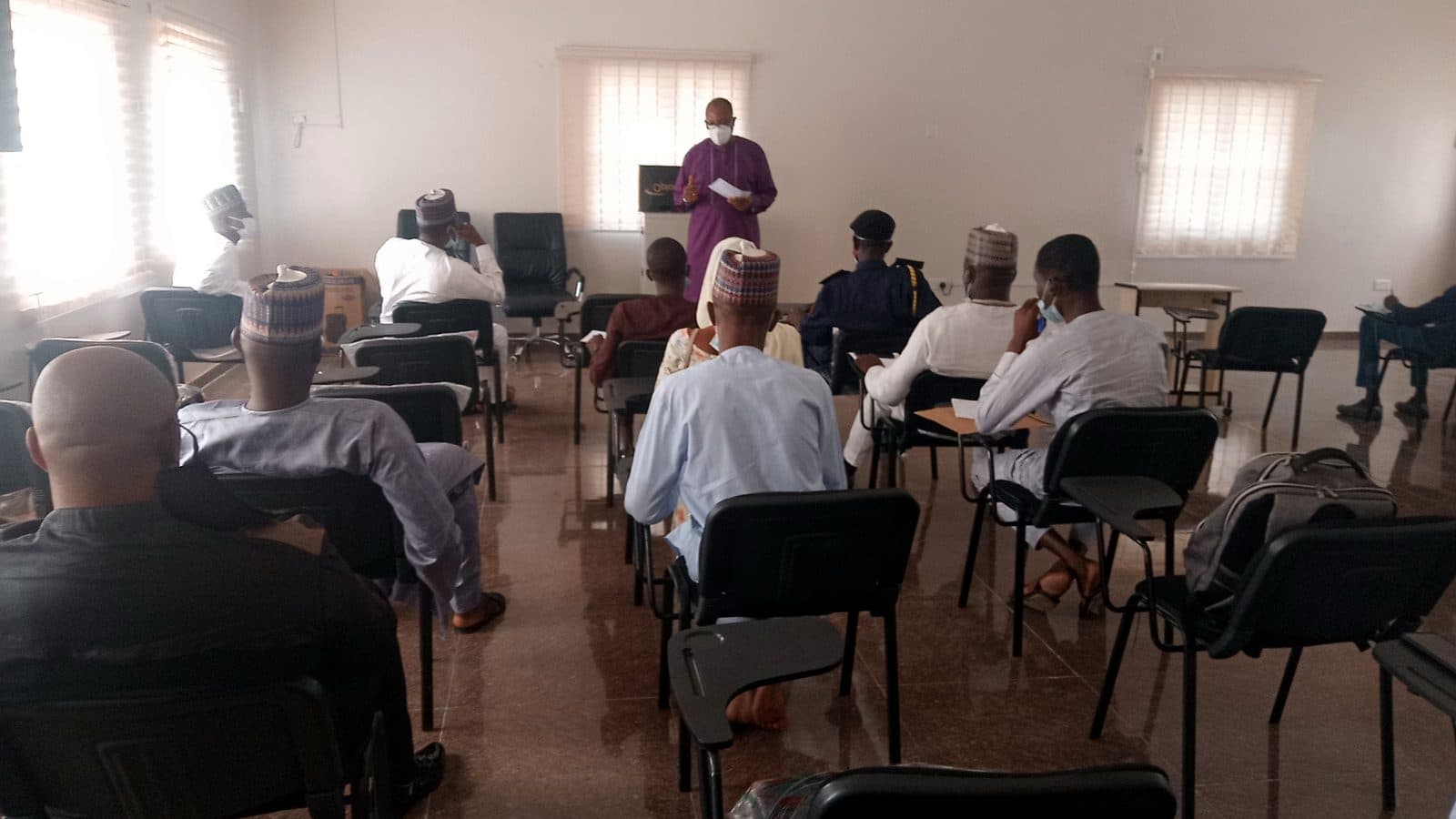
Why Nigeria first?
Nigeria is our fieldwork base. Its public data are good enough to show exactly where the gaps are. Most national surveys report at the national, zone or state level, and a ministry or donor often needs a figure below that.
The rules are written down
Health studies in more than three sites need approval from NHREC. The Data Protection Act 2023 and its 2025 directive, in effect since 19 September 2025, set duties for anyone who holds personal data.
The supply of standards is shifting
USAID support for the DHS Program ended in February 2025, and the programme is only partly sustained. We design to MICS, the World Bank’s LSMS surveys and national statistics offices, and keep DHS methods as a reference.
The languages are many
Ethnologue counts 520 living indigenous languages in Nigeria. English is the official language, and Hausa, Igbo and Yoruba are official in parts of the country. We translate by a documented method and test in the language of the respondent.
What does the evidence say about Nigeria?
Five sector pages carry dated, sourced figures on Nigeria, with what we don’t yet know.
What does Africa mean for us?
Nigeria is where we do fieldwork. The evidence pages look across Africa where the question is continental. We take fieldwork to another country only when five checks are met, and we say so on this page when they are.
The continental questions we follow
These open questions are about Africa as a whole. We list them so that nobody has to rediscover the gap.
What have the aid cuts done to health services and outcomes?
Little evidence yetMost published estimates are modelled scenarios. Measured, facility-level evidence is still thin.
Are cash transfers keeping up with prices, and do they change local prices?
Little evidence yetThe literature on transfers and inflation is limited, and its findings are divided.
How many children are out of school in conflict-affected areas?
Little evidence yetModels can miss children in crisis countries, because enrolment changes suddenly and conflict disrupts data collection.
How many people are dying in Africa’s wars, and of what?
Little evidence yetEstimates for Sudan differ by tens of thousands, and all are probably undercounts.
Is mobile money closing the gender gap, and does access change women’s lives?
Asked widelyTwo readings of the same data point in different directions, and neither shows what accounts change for women.
What must be true before we work in another country?
Five checks. If one fails, we say so, and we say who is better placed. The evidence beside each check shows why it exists.
1. A national ethics route we can follow
What we look at: We look at whether a national ethics committee exists, who reviews studies outside health, how long review takes, and what a multi-site study needs.
A WHO Africa Regional Office study found ethics review systems uneven and called for support to countries without national ethics committees. In 2025 Africa CDC proposed a continental committee for multi-country health research.
2. A data protection law we can comply with
What we look at: We read the country’s own law and regulator, not a list. We check what it says about research, sensitive data and transfers abroad.
In February 2023, 36 of 54 African countries had data protection laws or regulations, and the African Union’s Malabo Convention entered into force on 8 June 2023. The count changes, so we recheck.
3. A statistical backbone to design against
What we look at: We look for a recent survey, a usable frame and a national statistics office to work with.
The World Bank’s LSMS-ISA programme works with the statistics offices of eight countries: Burkina Faso, Ethiopia, Malawi, Mali, Niger, Nigeria, Tanzania and Uganda.
4. Local leadership and language
What we look at: A named in-country partner leads or co-leads. Tools are translated by a documented method and tested in the language of the respondent.
The African Evaluation Principles are written for everyone who finances, commissions, manages, conducts and teaches evaluation in Africa.
5. Access we can make safe
What we look at: A conflict analysis first. Monitors chosen for independence, paid and protected. A rule for stopping.
Third-party monitoring gives eyes where staff can’t go. It also brings poor reporting quality, conflicts of interest and risk passed to local monitors.
The evidence is a reason for the check, not a verdict on any country. Each check is applied country by country.
Which countries are on the list?
None yet. We will list a country here when we have done fieldwork there, or when we have named a partner and passed the five checks.
Nigeria
WorkingFieldwork base. Team and partners: see “Our team on the ground”.
Other countries
noneNone listed yet. Each country will get a row, with its status and its partner.
Our team on the ground
Office
Lagos
Zones where we have completed fieldwork
All six: North Central, North East, North West, South East, South South, South West
Only statements that are true today. We add staff numbers and named field partners here when we can state them exactly.
How do we keep this page true?
Only what is true today
Every statement about our team, our fieldwork and our partners is true on the date at the top, or left blank. We would rather show an empty row than a rounded one.
Every fact has a source
Each survey, law and standard on this page links to its own source, with its date. Where a source is secondary, we flag it until we replace it.
Reviewed every quarter
We review this page with the sector pages. Every change is listed at the foot, with its date.
Corrections
If you find an error, write to enquiries@probatioafrica.com. We correct errors quickly and note the correction and its date at the foot of the page.
Funding and independence
This page is paid for from Probatio Africa's own income. No outside funder pays for it, and no funder or client edits it before publication.
To cite this page
Probatio Africa (2026). Where we work. As of October 2026. https://probatioafrica.com/where-we-work. Accessed 7 October 2026.
Need work where we aren’t listed yet?
Tell us the decision, the country and the date. We’ll say whether we can do it with a named partner and, if not, who is better placed.